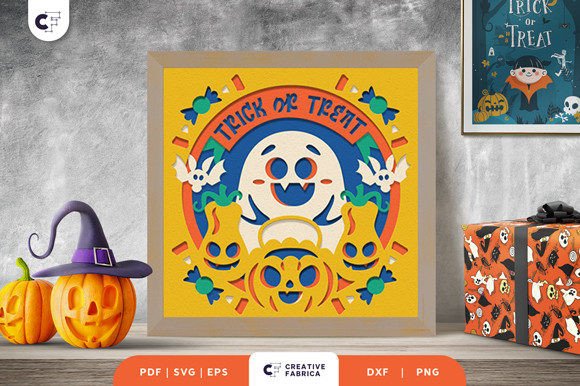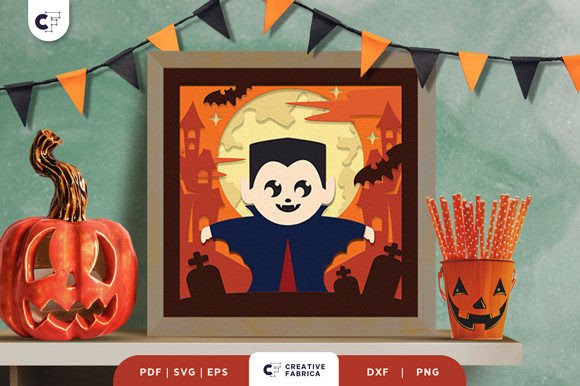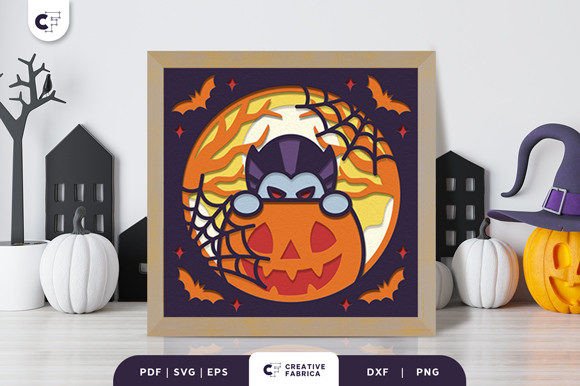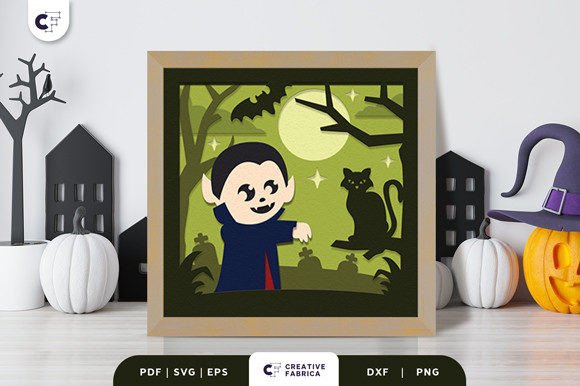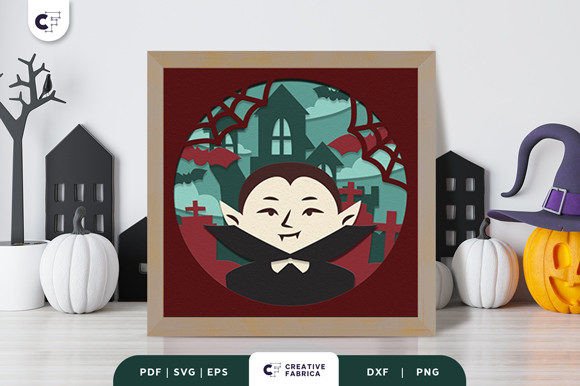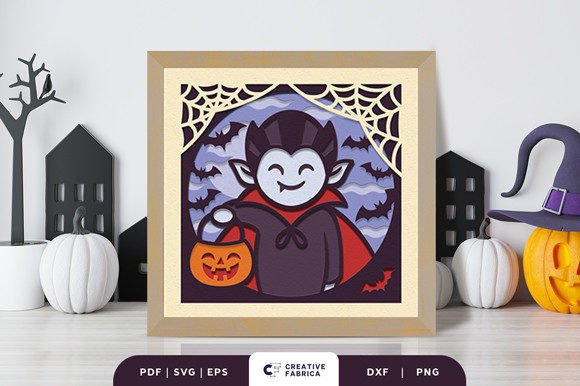
Vampire with Bag of Candy 3D Paper Cut
First Impressions: Playful, Not Spooky—Perfect for Modern Halloween
As someone who’s stitched hundreds of holiday designs—from subtle botanicals to bold pop-culture motifs—I opened Vampire with Bag of Candy 3D Paper Cut expecting whimsy. What I got was a refreshingly balanced blend of cheeky charm and clean visual structure. It’s not scary; it’s sweetly mischievous. The vampire leans slightly, one foot propped on the coffin edge, holding a candy bag that’s full but not overflowing—just enough detail to read instantly, even at small scales. That tilt? It adds motion. That bag? A built-in focal point for thread color play. This isn’t just a Halloween silhouette—it’s a character with personality, designed to land well on everything from baby onesies to boutique aprons.
Real-World Test: Stitching It onto a Linen Tote Bag
Last week, I prepped a custom order: a medium-weight natural linen tote for a local gift shop’s October launch. I chose Vampire with Bag of Candy 3D Paper Cut as the centerpiece—not because it’s “trendy,” but because its proportions hold up on fabric with visible weave. The design’s outer contour is generous, with no ultra-thin connectors or fragile interior cutouts. That meant fewer stabilizer adjustments and cleaner satin-stitched edges when I ran it at 4.2" wide. Customers responded immediately: “It’s cute, not creepy,” one said. “My niece will love this.” That’s the real win—not just technical execution, but emotional resonance. For Etsy sellers and small shop owners, that kind of reaction translates directly to repeat orders and social shares.
Where It Shines (and Where It Needs Care)
- Custom apparel: Works beautifully on sweatshirts and relaxed-fit tees—especially with a light tear-away stabilizer. The candy bag’s rounded shape avoids harsh corners that snag during wear.
- Baby embroidery: Softened thread palette (think dusty rose, charcoal gray, cream) keeps it gentle and age-appropriate. Avoid dense fill stitches in the cape area if stitching on knit onesies—opt for lighter fill or outline + satin combo instead.
- Embroidered patch: Clean lines and minimal interior detail make it ideal for heat-seal or sew-on patches. Just confirm your patch backing allows for moderate stitch density—no need for heavy underlay here.
- Holiday gifts & boutique branding: Stitches crisply on tea towels, pillow covers, and kitchen aprons. Its 3D SVG-inspired layering reads well even without backlighting—ideal for non-light-box applications.
Watch These Details Before You Stitch
This isn’t a “load-and-go” file—and that’s a good thing. Its thoughtful layout asks for intentional choices. First: stitch density matters. The candy bag’s texture reads best with moderate fill stitch—not too sparse, not so dense it muddies on textured fabrics like terry cloth or bouclé. Second: hoop size. While it fits comfortably in a 5x7 hoop, pushing it to 6" on stretchy fabric risks distortion unless you use cutaway + topping combo. Third: thread colors. The vampire’s cape reads richly in deep plum or forest green—but avoid black-on-black fabric unless you add a subtle white underlay or switch to a contrasting satin stitch edge.
Fabric & Fit Considerations You Can’t Skip
I tested Vampire with Bag of Candy 3D Paper Cut across five common substrates: cotton poplin, midweight denim, French terry, baby rib knit, and dark twill. On smooth cotton and denim? Flawless. On French terry? Required medium cutaway + soft topping to prevent sinking into loops. On baby rib? Only worked cleanly at ≤3.8" width—any larger, and the satin-stitched eyes blurred. And on dark twill? I added a single layer of water-soluble topping to lift the candy bag’s highlights. Key takeaway: this design rewards attention to fabric texture—not just color. If you’re selling embroidered caps or curved-surface items, test the vampire’s pose on a mock cap first. His angled stance handles curvature better than upright figures, but the bag’s bottom edge still needs careful digitizing review.
For Your Craft Business: Trust, Value, and Repeat Buyers
When customers see Vampire with Bag of Candy 3D Paper Cut stitched cleanly on a handmade product, they don’t just see Halloween—they see care. The balanced spacing between elements says “designed,” not “dumped.” That builds trust. For Etsy sellers, that means fewer “not what I expected” messages and more five-star reviews mentioning “adorable detail” or “so well stitched.” For wholesale partners or boutique owners, it supports cohesive seasonal collections—pair it with coordinating candy corn or ghost motifs, and you’ve got a mini-theme that feels intentional, not assembled.
Practical Designer Notes Before You Commit
- Always run a test stitch on scrap fabric matching your final substrate—and same stabilizer stack.
- Check how the candy bag’s curves translate in black-and-white mockups; contrast shifts dramatically on dark vs. light backgrounds.
- Review interior details (like the vampire’s grin or bag drawstring) at actual stitch size—some 3D SVG adaptations lose clarity when converted to embroidery files.
- Confirm licensing terms before listing finished products or digital embroidery files for resale—this affects craft business scalability.
- Use proper stabilizer: cutaway for knits, tear-away for stable wovens, and topping for napped or textured surfaces.
Bottom line? Vampire with Bag of Candy 3D Paper Cut isn’t just another Halloween file. It’s a versatile, audience-aware machine embroidery design that bridges playful theme and professional execution. Whether you’re stitching personalized gifts, building an Etsy shop’s seasonal lineup, or creating small-batch merchandise for a local café’s October event—it earns its place in your design assets. Just treat it like the considered piece it is: test thoughtfully, stitch intentionally, and let its charm do the rest.